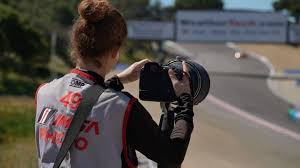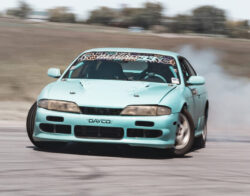
Best Settings to Film Racecars on the Track

Capturing racecars in action requires camera settings optimized for speed, motion, and lighting. Here’s a guide for both photography and videography:


Photography Settings

  1. Mode: Shutter Priority (Tv/S Mode)

    • Use this mode to control shutter speed while the camera adjusts other settings.
  2. Shutter Speed:

    • Fast Action Shots: 1/1000s or faster to freeze motion.
    • Panning Shots: 1/60s to 1/250s to create motion blur in the background while keeping the car sharp.
  3. Aperture:

    • Use a wide aperture (f/2.8–f/5.6) for shallow depth of field and subject isolation.
    • Narrower aperture (f/8–f/11) for sharper background details if needed.
  4. ISO:

    • Daytime: Keep ISO low (100–400) to minimize noise.
    • Low Light: Increase ISO, but avoid going too high to reduce noise.
  5. Focus Mode:

    • Continuous/AI Servo AF: Keeps focus on moving subjects.
  6. Drive Mode:

    • Burst/Continuous Shooting: Capture a sequence of shots to ensure you get the best frame.
  7. Stabilization:

    • Turn off lens/camera stabilization if panning to avoid interference.

Videography Settings

  1. Frame Rate:

    • Smooth Action: 60fps or higher.
    • Cinematic Look: 24fps or 30fps (use motion blur creatively).
  2. Shutter Speed:

    • Follow the 180-degree rule: Shutter speed = 2 × frame rate (e.g., 1/120s for 60fps).
  3. Resolution:

    • 4K for high-quality footage with cropping flexibility.
    • 1080p for smoother playback and lower storage needs.
  4. ISO:

    • Use a low ISO during the day (100–400).
    • Increase ISO in low light, ensuring minimal noise.
  5. Focus:

    • Manual Focus: For predictable movement paths.
    • Continuous AF with Tracking: For unpredictable movement.
  6. Lens Choices:

    • Wide-Angle: Captures the scene and the track (e.g., 24mm–35mm).
    • Telephoto: Isolates the car and compresses distance (e.g., 70mm–200mm).
  7. Stabilization:

    • Use a gimbal or stabilizer for handheld shots.
    • Tripod or monopod for stable panning shots.

Tips for Both

  • Location Matters: Position yourself at turns, starting lines, or straight stretches for dramatic angles.
  • Panning Technique: Smoothly follow the car’s motion, keeping it centered in the frame.
  • Lighting: Be mindful of the sun’s position; early morning or late afternoon light creates dynamic shadows and highlights.
  • Practice: Timing and coordination improve with practice—experiment with settings and techniques.